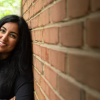

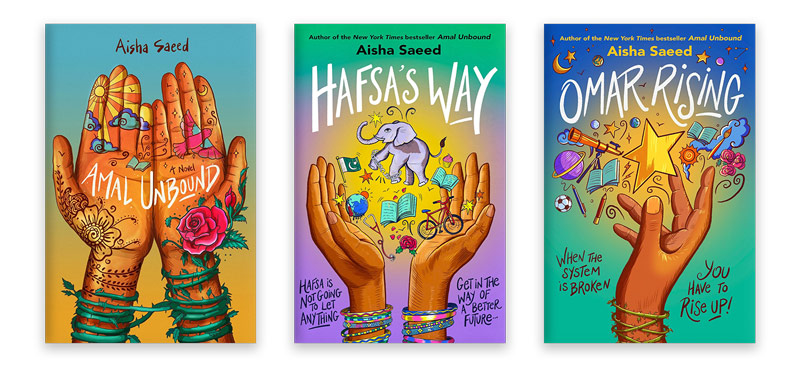
Aisha Saeed’s middle grade novels often feature young people who are forced to tough it out: characters who somehow manage to find their own way despite big limitations being placed upon them. Her 2026 novel Hafsa’s Way (Nancy Paulsen Books), for example, features a Pakistani girl who is determined to pursue her dream of becoming a doctor, regardless of the many obstacles standing in her path. The novel is a companion to Amal Unbound (Nancy Paulsen Books, 2018) and Omar Rising (Nancy Paulsen Books, 2022). It’s not necessary for readers to have already enjoyed Saeed’s earlier titles to be immediately absorbed in Hafsa’s richly detailed story, but taken all together, the books present an absorbing picture of these three characters’ interconnected lives, set against a backdrop that will be new to many readers.
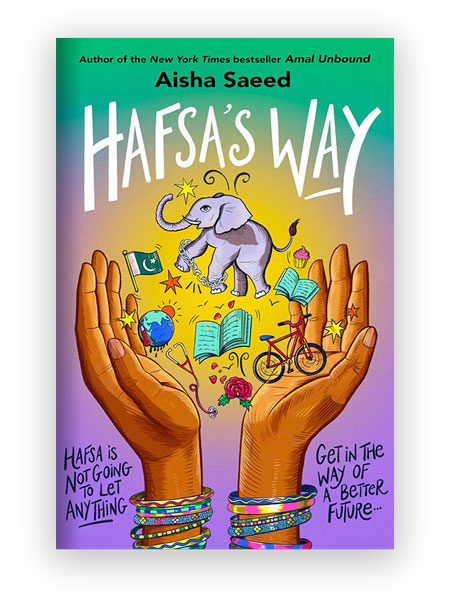
Here, Saeed talks with Lisa Bullard about the power of believing in yourself, the value of reading all books (even the ones you don’t love), and a writing exercise she uses to inspire students’ stories.
Did you always know you wanted to tell Hafsa’s story, or did you decide to do so after Amal and Omar’s books were published?
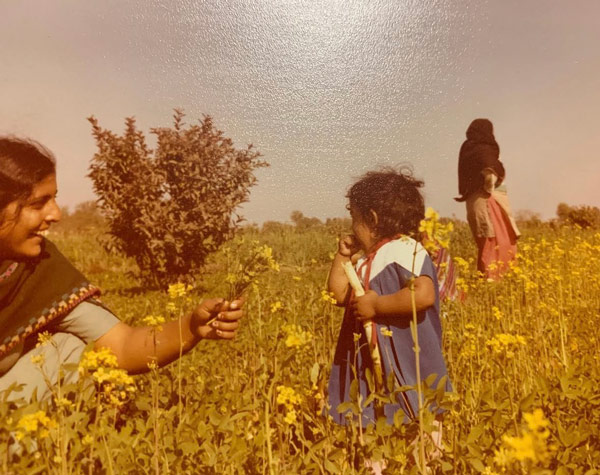
Amal Unbound, Omar Rising, and Hafsa’s Way are all inspired by my ancestral village in Pakistan. As a child, I loved visiting my grandparents’ farm, playing in the sugar cane fields and orange groves, and visiting the local market. I wrote these stories to bring to life the people and communities from this little corner of the world that readers may never otherwise know.
When writing Amal Unbound, I fell in love with Amal’s two best friends, Omar and Hafsa.
Omar Rising followed Omar’s struggles and triumphs during his first year of boarding school as he pursues an education, with the hope of pulling himself and his family out of poverty.
In Hafsa’s Way, Hafsa dreams of becoming a doctor. The novel follows a summer she spends in the city attending a summer science camp despite her parents’ disapproval. Her story explores what it means to believe in yourself even when others may not, as well as the power we each have to stand up for those who need us.
I wrote these stories to bring to life the people and communities from this little corner of the world that readers may never otherwise know.”
How do you hope readers will respond to Hafsa’s story in terms of learning how to face their own challenges?
I hope readers are inspired by Hafsa’s resilience and find within her their own strength to keep going, even when the odds are against them.
Hafsa’s persistence in following her dream brings her to a big city, where she takes up an unexpected fight to rescue an abused elephant. Your author’s note tells readers that this is based on a true story. How did you weave together Hafsa’s story with the real elephant’s story?
At a school field trip in Hafsa’s Way, Hafsa meets an elephant at the local zoo and is horrified to witness the elephant’s mistreatment. The elephant is inspired by real-life elephant Kavaan. As a baby, Kavaan was given as a gift. But when he grew too big, as elephants do, he was donated to the local zoo, where he lived a lonely and difficult life until public outcry led to his relocation to a sanctuary in Cambodia where he could live in peace.
In Hafsa’s Way, Hafsa sees herself in this lonely and isolated creature, as she feels ostracized at her summer camp. But Hafsa realizes that unlike the elephant, she has agency, and she decides to use it to help an animal who cannot help himself.
Do real-world events always inspire your fiction? What would you tell young writers who want to build on real-world details in their own stories?
The artist Nina Simone once said, “An artist’s duty, as far as I’m concerned, is to reflect the times.” I write to make sense of the world around me, and the times I live in definitely show up in the stories I tell. As authors, I think no matter what we write—even if it’s fantasy or science fiction—we always bring a bit of ourselves and the times in which we live into the story. And I think that’s a beautiful thing. Stories help us to more deeply understand ourselves and one another, and we should embrace our lives and the stories they can inspire.
As authors, I think no matter what we write—even if it’s fantasy or science fiction—we always bring a bit of ourselves and the times in which we live into the story.”
What details about your own childhood would you like to share with young readers? In what ways did those years shape you as a writer?
When I was in second grade, I set a personal goal to read every single kid’s book at my local library by the end of the year. I did not succeed in this goal, but I have always been a huge reader and read as much as possible.
People often ask me for advice on how to be a writer. I never took writing classes. I did not major in creative writing. I was a teacher and a lawyer before I became an author. I learned to write by reading. I truly believe this is the best way to hone craft. If you love a book, read it again and study the characters, settings, pacing. There is also value in reading books you don’t love. If you’ve been assigned a book by your school that you don’t love, you can still learn from it. Ask yourself why it didn’t work for you. I firmly believe most stories have something to teach us about the craft of writing.
I learned to write by reading. I truly believe this is the best way to hone craft.”
Your past experiences include teaching second graders. Is there a favorite writing exercise you’ve used with your students?
As a teacher and an author, I love helping students discover starting points for storytelling. One exercise I do is to guide them in exploring character traits. Students write their names in the middle of a page and from there brainstorm one-word descriptors of who they are, what they love, and what they are afraid of. They share a few of their words with the class and explain why they chose them. This exercise often helps students to see possible starting points from their own lives to sketch out a story.
What’s your favorite part of writing for young readers?
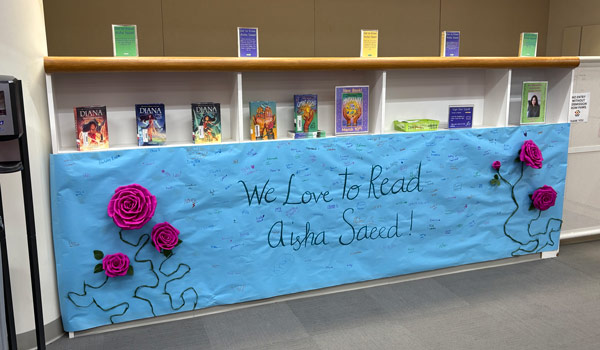
My favorite part of writing for young readers is the readers. Whether it’s at book festivals, school visits, or through reader mail, I love to hear from the people I write for. I have been writing and publishing stories since 2015, and this part never ever gets old. I am so grateful I get to do what I do.
Do you have a favorite anecdote about the way a young fan has responded to one of your books?
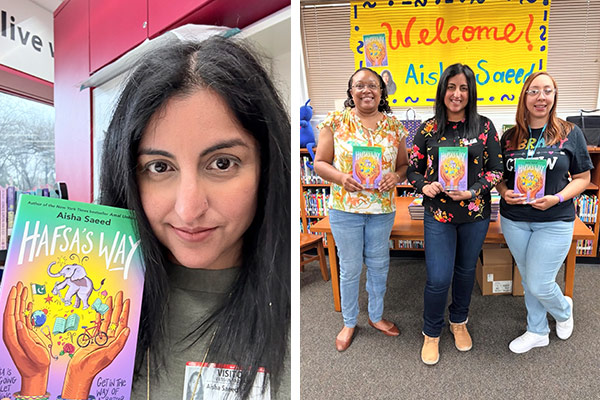
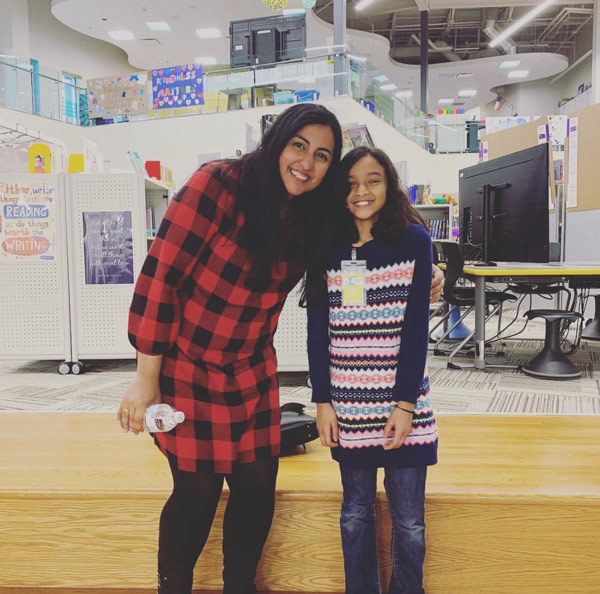
As writers, we never know how our work will be received by readers and the impact it may have. This past March, at a book festival in Texas for Hafsa’s Way, I met a teen who told me I’d visited her classroom in 2018, to discuss Amal Unbound. She told me the story has always stayed with her, and she plans to take the book with her to college because Amal reminds her we can never lose hope, no matter how difficult things can be. Hearing from readers about the impact my books may have had on them is the most impactful and meaningful experience I could hope for.
I met a teen who told me I’d visited her classroom in 2018, to discuss Amal Unbound. She told me the story has always stayed with her, and she plans to take the book with her to college because Amal reminds her we can never lose hope.”
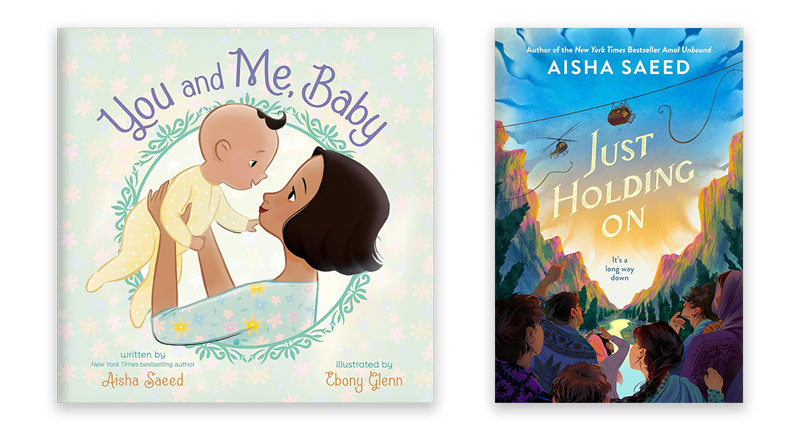
You write for a broad range of readers: picture books as well as middle grade, YA, and adult novels. In fact, earlier in 2026, your picture book You and Me, Baby (Nancy Paulsen Books, illustrated by Ebony Glenn) was published. It’s a perfect celebration of babies and mamas for very young listeners. How did that story come about?
Thank you! You and Me, Baby was inspired by becoming a mom for the first time. When my first son was born, I was terrified. I’d read so many parenting books, but once he was here, I realized I had no idea what I was doing! Through the journey of parenting, I realized that just as I was teaching him, he was teaching me how to be his mother. This inspired You and Me, Baby as a celebration of the beautiful relationship between mothers and their children.
How does your approach to writing a picture book compare/contrast to writing a novel?
People often assume writing pictures books must be easier than novels, but picture books take me a great deal of time. It is hard work to create a whole world— character, setting, and plot—with a word count so brief, and it can take me quite a long time to get it just right. The most special part of writing a picture book, as compared to writing novels, is that picture books are illustrated throughout. So, unlike a novel, a picture book is a collaboration between me and the illustrator. I love getting sketches and seeing how the illustrator took the words I wrote to create a whole world illustrated on the page. It is my absolute favorite thing.
Can you tell your fans any details about your forthcoming books for young readers?
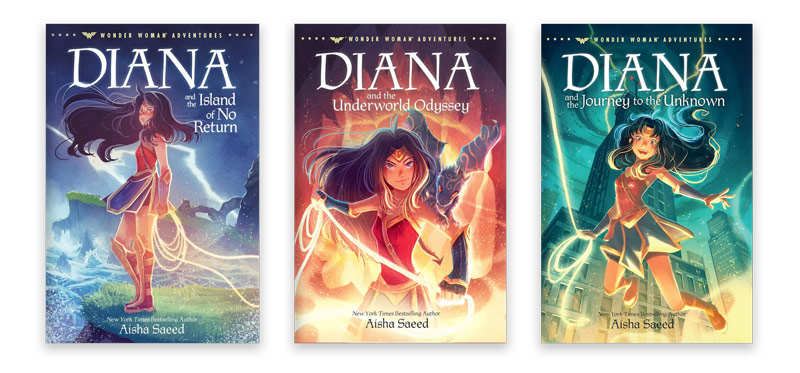
I am not yet done telling stories set in Pakistan. My next middle grade book will be a novel-in-verse. Just Holding On (Nancy Paulsen Books, 2027) is a page-turning suspense story about four children who get stranded thousands of feet in the air when a cable on the gondola car that is taking them to school snaps. The novel follows their harrowing ordeal as the time ticks down for them to be rescued. It will hit shelves summer of 2027.
What are the best ways for educators and librarians to connect with you or to follow you on social media?
You can find me on Instagram @aishacs or sign up for my newsletter at https://aishasaeed.substack.com/.