

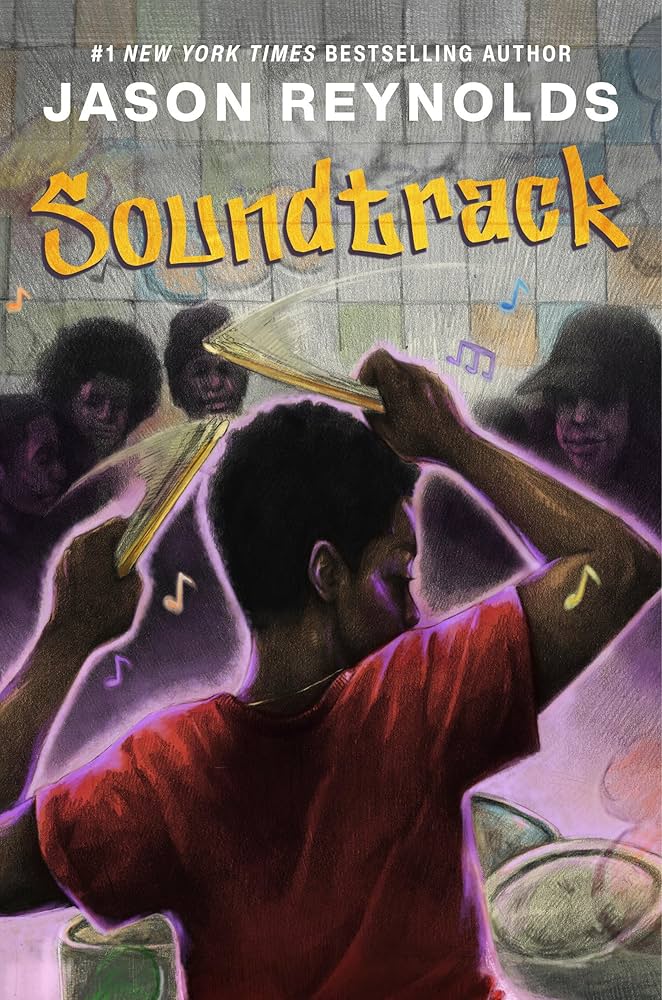
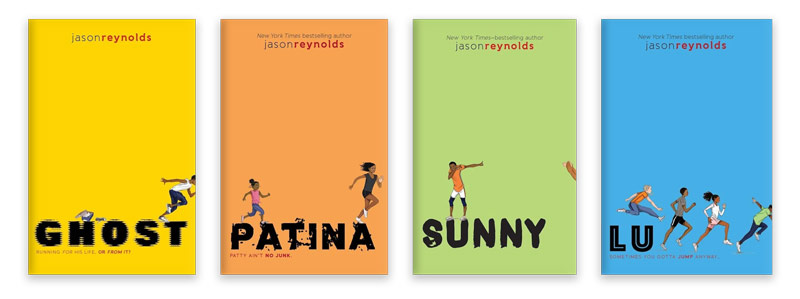
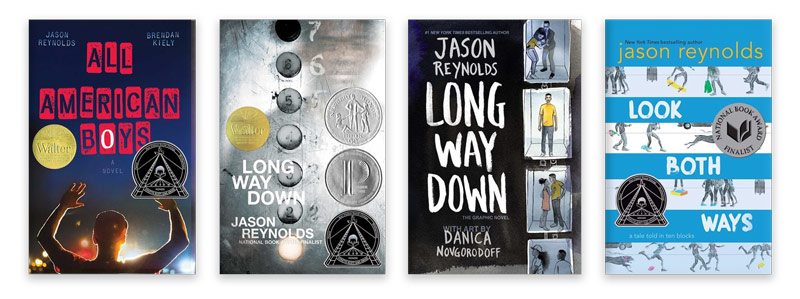
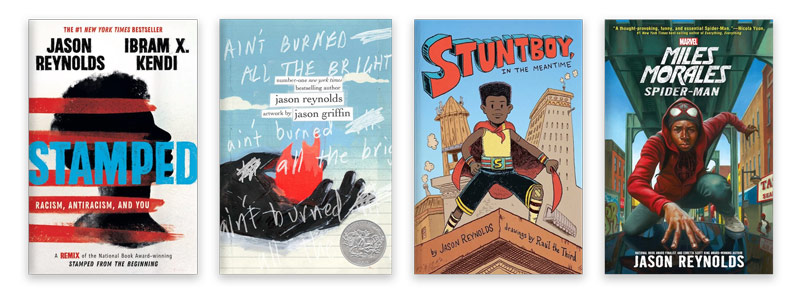
There are a lot of ways to describe Jason Reynolds’ books: Groundbreaking. Relatable. Gripping. Or as School Library Journal said recently in their starred review of Soundtrack: A Novel (Crown Books for Young Readers, 2026), “Librarians can’t go wrong putting any Reynolds novel on their shelves, and his latest is no exception.” The title came out in April as a print adaptation of Reynolds’ award-winning audiobook that features eighteen-year-old drummer Stuy as he navigates big changes in his life and in New York City during the early 2000s. The novel is poised to become another fan favorite for the former National Ambassador for Young People’s Literature, and it joins other engrossing and highly honored reads from Reynolds, including Long Way Down (Atheneum/Caitlyn Dlouhy Books, 2017), Twenty-Four Seconds from Now (Atheneum/Caitlyn Dlouhy Books, 2024), Ghost (Atheneum/Caitlyn Dlouhy Books, 2016), and Look Both Ways (Atheneum/Caitlyn Dlouhy Books, 2019).
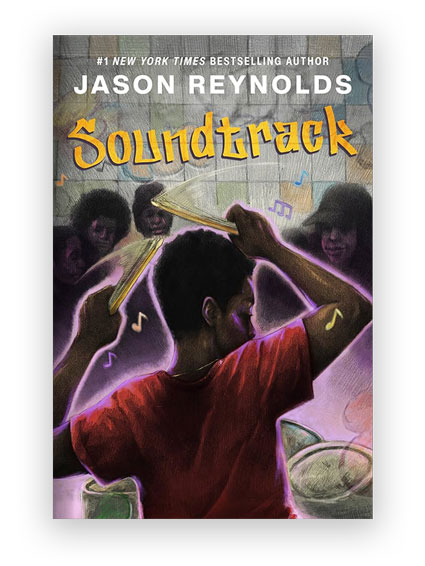
Here, Reynolds talks with Lisa Bullard about music as a metaphor for life, how his spontaneous creation process helps him discover magic, and the best part of writing for younger readers.
Soundtrack explores the physical terrain of New York, the musical terrain that has shaped Stuy’s passion for drumming, and emotional terrain as Stuy decides who he’ll claim as his family. What else would you like to say about the story?
A lot to unpack here. First, let me say that you’ve pretty much nailed what the book is about. The only thing I’d add—just as something for the readers to consider—is: What is the glue in our lives? For the kids in this story, it’s music. Music is the tie that binds. It’s the tether, and the thing that helps them learn the language of friendship and protection and ambition and, ultimately, love. But it could’ve just as easily been dance. Or writing. Or a book club. Or video games. We all have a glue.
What is the glue in our lives? For the kids in this story, it’s music. Music is the tie that binds. It’s the tether, and the thing that helps them learn the language of friendship and protection and ambition and, ultimately, love.”
For readers who are already fans of the audiobook, what new elements will they find to savor in the print edition?
I’d say the language itself. I think print often gives us the ability to dig deeper, to really question the author’s choices, and I hope that happens here, even in this format, which, by the way, I love. The script makes it something else. It changes the way the reader engages with the story, almost as if they’re acting it out. Also, it leans into demystifying and softening the hard edge of the straight-ahead novel, especially for the kid who might not be a straight-ahead reader.
How did the decision to treat the story’s dialogue as a script come about?
Well, that was practical. The audio had been out, which meant the book had already technically been published. So, I couldn’t then go in and edit. That wouldn’t make sense. To make it a script allows for it to feel more like an accompaniment to the audio, an experimental companion piece, which to me is cool!
Is there something in particular you hope readers will take away from the story?
Hmmm. Just that if we were to look at what music is really about, stripping away all the woo-woo of it, it usually boils down to timing. Music, and the ability to be good at playing, has to do with how well you understand rhythm and timing, and to me … that’s life. This strange experience all boils down to how well you understand the rhythms of it and the timing of it.
Music, and the ability to be good at playing, has to do with how well you understand rhythm and timing, and to me … that’s life. This strange experience all boils down to how well you understand the rhythms of it and the timing of it.”
Your own experiences as a poet show up in the rhythms of the story’s language and Stuy’s love of drumming. I was also fascinated by the spontaneous way that the band Soundtrack creates their music magic: They riff off the energy they bring to crowds, and the energy that the crowds return to them. Are there any parallels there with your own creation process?
I do write rather spontaneously. I just move my fingers. It usually feels like a fugue state, some strange trance where I’m allowing myself to release my insecurities for a moment to see if the mess I make is actually a mess, or is there something magical there for me to sift through? And usually … there’s magic. It all feels like bebop to me.
An Excerpt from Soundtrack by Jason Reynolds:
High school band isn’t really the coolest club in the world. That’s for sure. I mean, either you’re the band geek, walking around with a huge black case carrying a trombone, an instrument that no one really knows or cares about in high school, unfortunately. Or a band dummy, also known as a percussionist, which is short for “I can’t really play anything so they gave me the triangle and a shake-shake thing and call me a percussionist to make me feel more like a musician, when really I’m just a noisemaker.” And if you’re a drummer, like me, which is usually a cool instrument in bands, you were stuck playing marching rhythms and stupid “pat-pat-pats” on a snare, and that’s it. Not exactly drumming.
Then there was the “in a band” guys, who usually walked around school with guitar cases, and since the high school band didn’t have any guitars in it, that was a sign that people with guitar cases were actually in a band. A real band. Not some janky school band. School bands have recitals. Real bands have shows. But because my mother felt like it would be good for my drumming and would keep me off the streets, she made me join the school band.
But it wasn’t pat-pat-pat for me all four years. My junior year, I ended up convincing the band director Mr. Rochester to let me bring my set in. It wasn’t much. Just a bass, snare, high hat, and tom. It was all we could fit in our small two-bedroom apartment (the basement got too hot in the summer and too cold in the winter), and even that was still a bit much. Not to mention I couldn’t really play loud at home, only because my mother didn’t want our neighbors to complain to our landlord.
We couldn’t afford to get kicked out. She had been kicked out of a few places when she was playing with the Dusters, but back then she said it was okay because it was all about the music, and you could always find a couch to crash on and a can of sardines to slurp down.
But with me, she said she just couldn’t risk it. I loved the stories about her toughing it out, letting the music rule every decision, but I was glad I wasn’t crammed up on no couch, and I was definitely not into sardines.
Mr. Rochester let me bring the set in and said I could leave it at the school for the year and practice there whenever I wanted, as loud as I wanted. The next full band practice, I sat behind the set and brought some life to whatever drab song we were working on. Mr. Rochester was so impressed that when our big recital came, I had all kinds of drum solos.
After that, high school changed for me. I was cool. I would walk around twirling my drumsticks, which of course, girls liked. I would make beats on the lockers, and my friends would freestyle, and before you knew it there would be a crowd of people, including teachers, who were supposed to be stopping the whole thing but couldn’t because, well, what can I say? I’d be rocking! Everything was sweet. Until February of my senior year, when my mother met Dom. Or as I call him, Dummy.
Excerpted from Soundtrack: A Novel by Jason Reynolds. Used by permission of the publisher. Copyright © 2026 by Crown BFYR. All rights reserved. No part of this excerpt may be reproduced or reprinted without permission in writing from the publisher.
You include a playlist at the back of Soundtrack. Did you listen to this list while you wrote?
I definitely don’t listen to music when I write because I love music too much. I’d be singing or writing lyrics into my stories. Unless I’m listening to non-vocal jazz, but even then, I sing along to whatever the trumpet or saxophone is doing.
The concept of feeling like a space alien and a fascination for outer space are recurring elements in Soundtrack. Is that a fascination you share?
Funny enough, not so much. But I love the 70s psychedelic era in funk, soul, and jazz, and they all had a preoccupation with space. Like, to consider yourself an alien (in music) is really just a flex. I love that. But I ain’t got it.
What details about your own younger years would you like to share with readers?
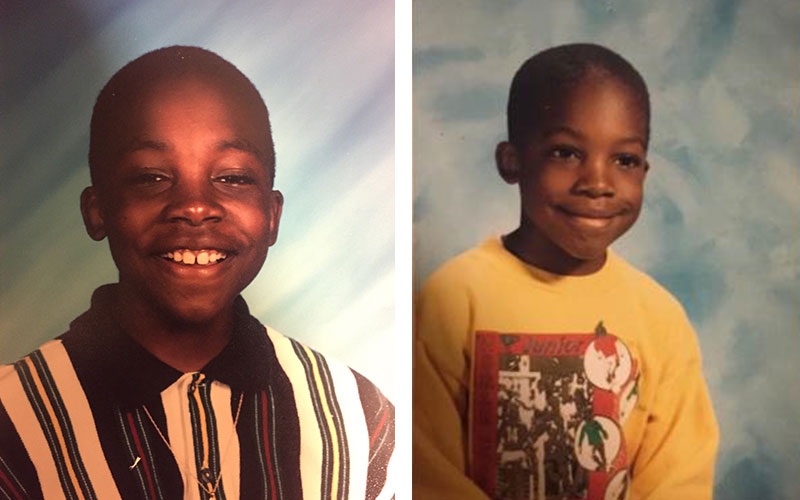
What a tricky question. I put so many of them in the books! All my business is on the page. So much in these stories is based on my actual life, so I’ve snitched on myself enough. What I will also offer, though, is that life is middle school forever. You just get used to it. Hahaha.
All my business is on the page. So much in these stories is based on my actual life.”
Do you have a favorite anecdote about how readers have responded to your books over the years?
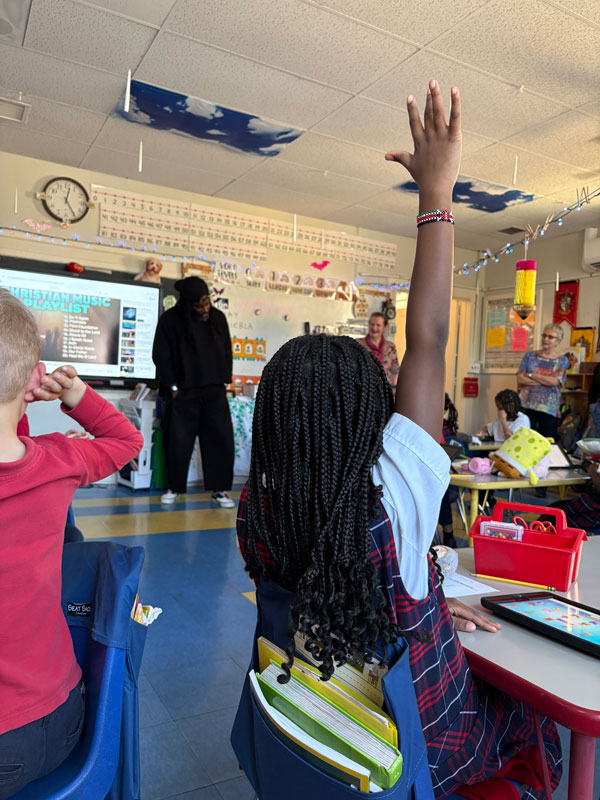
Too many to name. Sheesh, an embarrassment of riches, for sure. I’ll share one that’s recent. I was in the Netherlands just the other day, and I met this sweet teenaged boy named Kenji. He looked like he could’ve been my younger brother. The principal of the school told me Kenji was the reason I was there. Apparently, he’d written a letter to the publishers about one of my books, and his plea was so sincere that they had to figure out how to bring me over. He and I chatted and hung out for a while, and he told me my work is all he reads. I’m in the Netherlands! So humbling.
What’s your best advice for young people who have a dream that they want to pursue?
To become best friends with difficulty. If you can do that, you can win.
Become best friends with difficulty. If you can do that, you can win.”
What’s your favorite part of writing for younger readers?
I get to pretend I’m still cool. No, all jokes aside, I get to change the way they not only feel about reading, but also how they feel about writing, and who gets to do it, and what that person gets to look like, and speak like, and act like. I love that more than anything.
Can you share any details about your forthcoming books?
You wish. But there’s some stuff for YA. Some stuff for middle grade. And some stuff for adults.
What are the best ways for educators and librarians to connect with you or to follow you on social media?
@jasonreynolds83, or contact Elena Giovinazzo at elena@heirloomliterary.com
And you can find the “Educators’ Guide” for Soundtrack at:
https://rhcbteacherslibrarians.com/wp-content/uploads/2026/03/Soundtrack_EG_HiQ.pdf