
Alicia D. Williams traces her love of storytelling back to her childhood when she listened to tales told by family elders and read books she borrowed from a bookmobile. Now the award-winning writer—whose recognition includes a Newbery Honor—creates titles ranging from picture books to middle grade novels. Williams’ newest picture book is Nani and the Lion (Atheneum/Caitlyn Dlouhy Books, 2026), illustrated by Anna Cunha. In the story, the people of a village and the nearby animals are all afraid of Lion, who doesn’t like noise. Even Nani, who loves to drum, tries to stay quiet. But then Nani boldly decides to make herself heard and her refusal to stay quiet leads to a village-wide celebration.
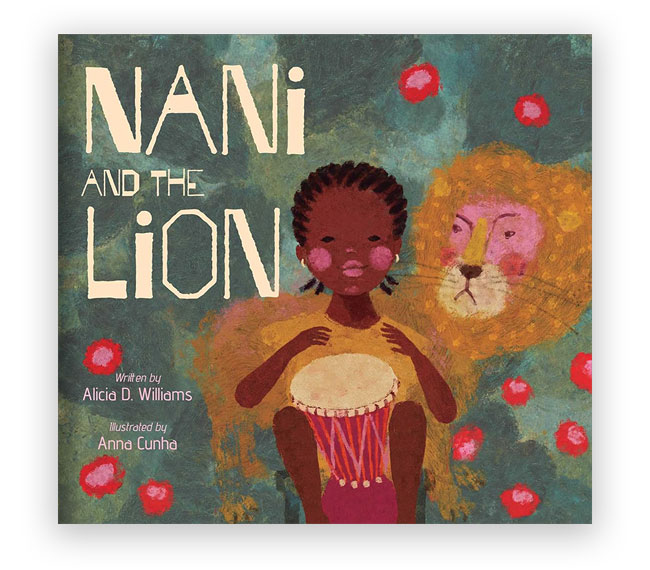
Here, Williams talks with Lisa Bullard about her passion for folktales, the power of classroom discussions, and the importance of believing in your dreams.
What inspired Nani and the Lion?
For this story, I simply got lost in the enjoyment of creating a folktale. However, I appreciate discovering the message of not staying quiet. Out of fear, people will try to stop you from doing what brings you joy. This teaches us to care too much about what others say, and thus, we teach children to do the same. And I love that Nani finds a way to overcome (and frees others to overcome) her obstacle by doing the very thing that makes her happy!
In my teaching artist residencies, I create lessons using the rhythmic Bringing the Rain to Kapiti Plain and Why Mosquitoes Buzz in People’s Ears, both by Verna Aardema. I adore Virginia Hamilton, especially her collections The People Could Fly and Her Stories. I’ve read Julius Lester’s John Henry and Uncle Remus along with Ashley Bryan’s Beat the Story-Drum, Pum-Pum and Ashley Bryan’s African Tales, Uh-Huh. Stories like Sukey and the Mermaid by Robert D. San Souci, Anansi the Spider by Gerald McDermott, Mufaro’s Beautiful Daughters by John Steptoe, and Mirandy and Brother Wind by Patricia C. McKissack were nighttime reading with my daughter.
As a teaching artist, my lessons default to folktales. These tales lend themselves to imagination, movement, and engagement. I’ve been told children chant, create games, and reenact the tales during recess. Isn’t that amazing? That’sthe beginning of writer’s workshop! And the celebration at the end of Nani and the Lion? It comes from leading these lessons.
Out of fear, people will try to stop you from doing what brings you joy. This teaches us to care too much about what others say.”
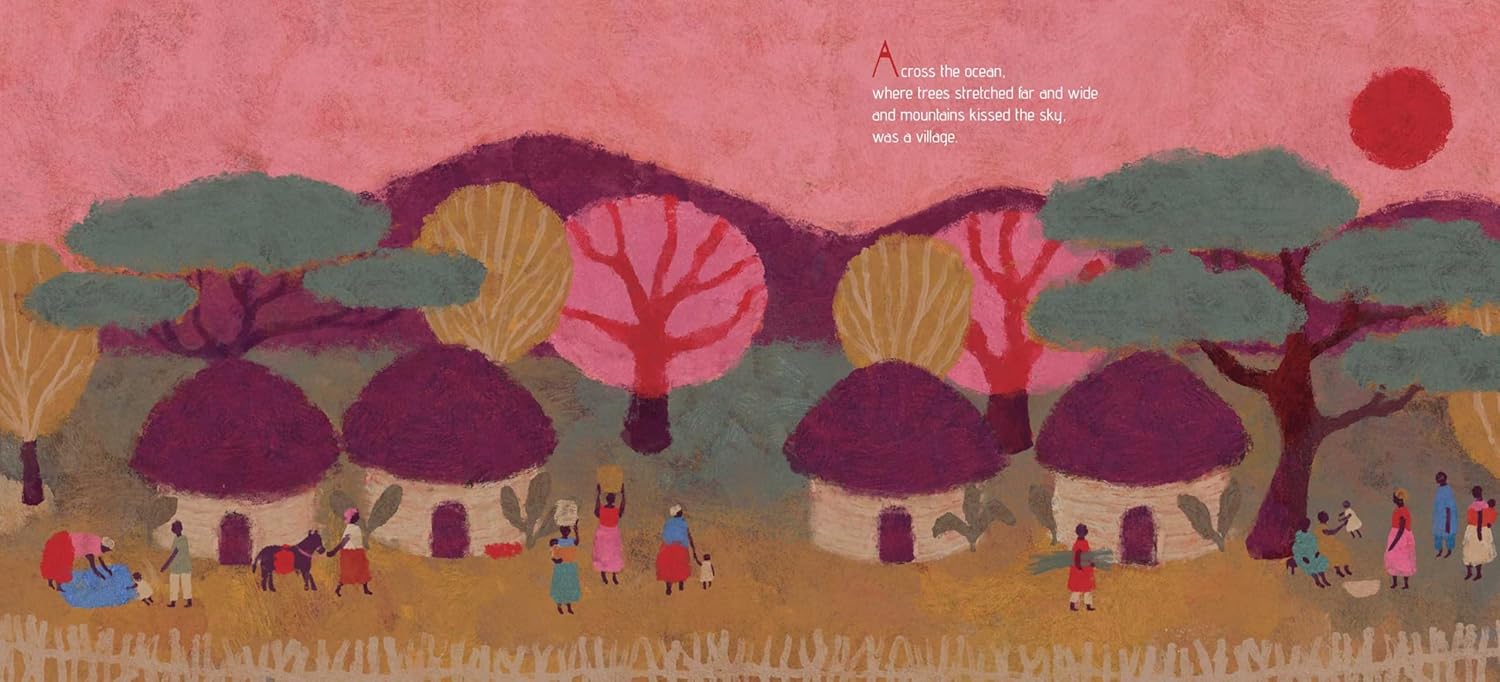
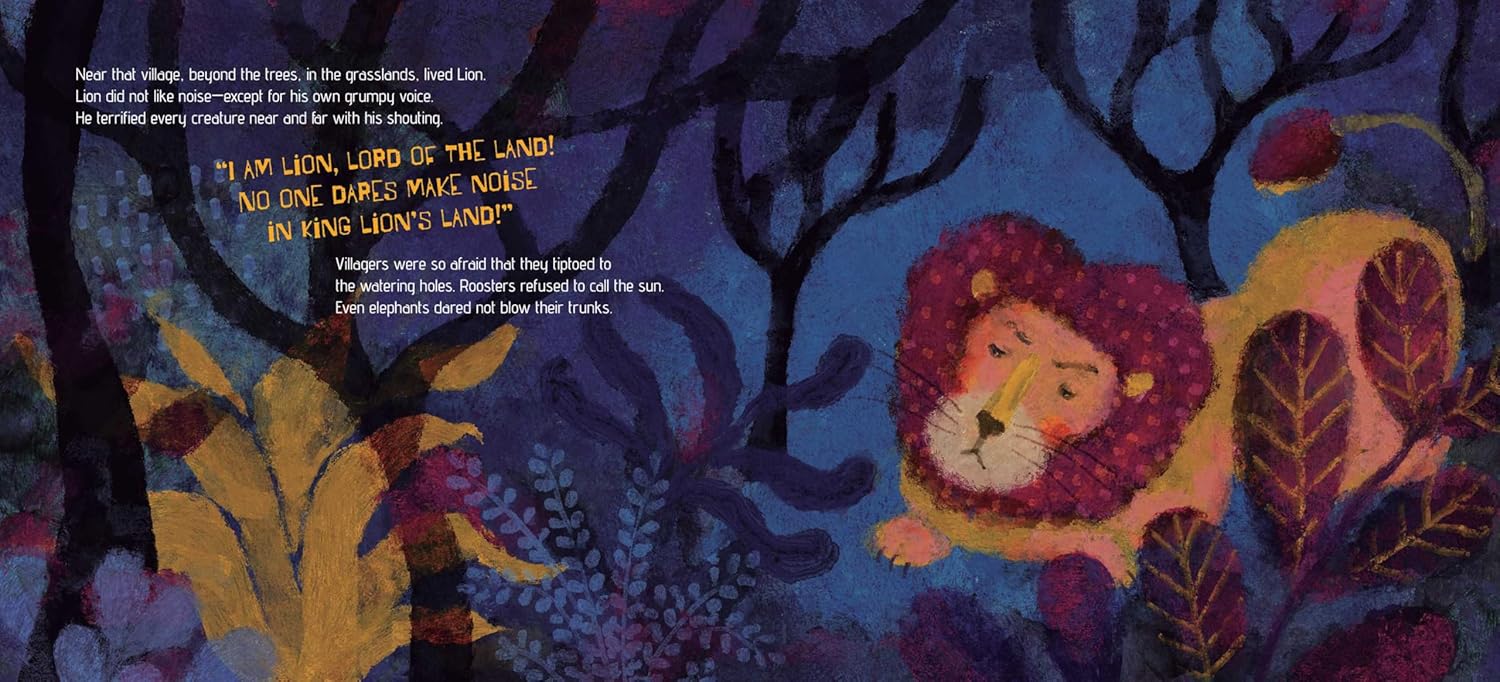
One of the most wonderful features about Nani and the Lion is the way your words pound out a rhythm that has readers dancing across its pages. You also use sound effects that bring the story to life. Both of these elements illustrate your experience as an oral storyteller. How does oral storytelling compare with stories that are written to be read on paper?
Thank you!
Oral storytelling begins at home. I encourage young people to listen as older family members share childhood stories passed down from grandparents to aunts and uncles and moms and dads. Practice retelling them. That’s how I started.
Unlike written text, you can play with volume, vocal expression, body movement, and facial expressions with oral storytelling. On the page, you have to work a little harder for the same energy. We call that voice.
Some tales lend themselves to voice and musicality. For example, Bringing the Rain to Kapiti Plain has a rhythm that plops off your tongue like raindrops. When Mosquitoes Buzz in People’s Ears has the pesky s’s and z’s that make our lips hmm. The musical elements, with repetition and rhythm, make you want to move! They’re fun and playful.
With written storytelling, readers may not recall words or details, but when we tell stories, we add audio and visual components, plus the connection through eye contact. These elements allow tales that live inside us to be retold. That’s the power of oral storytelling. (And its super-duper power is how it builds the brain!)
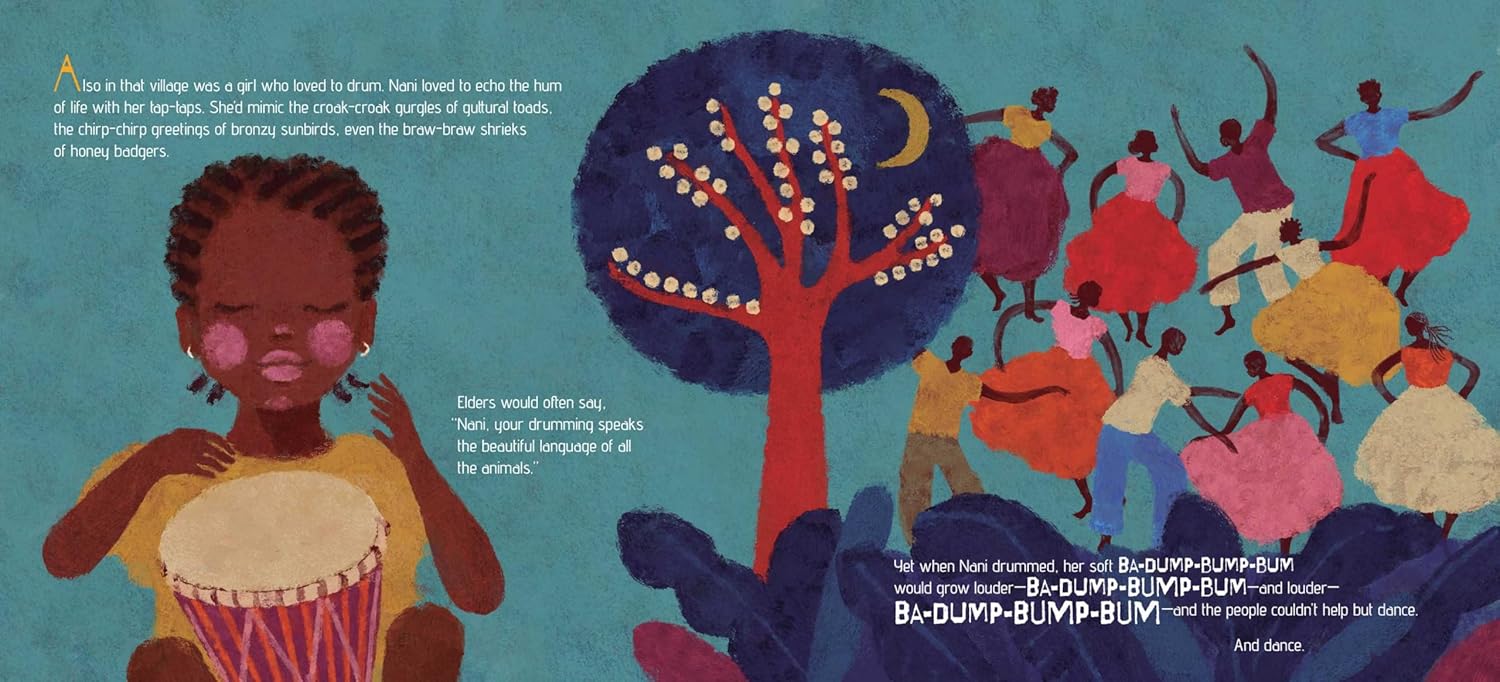
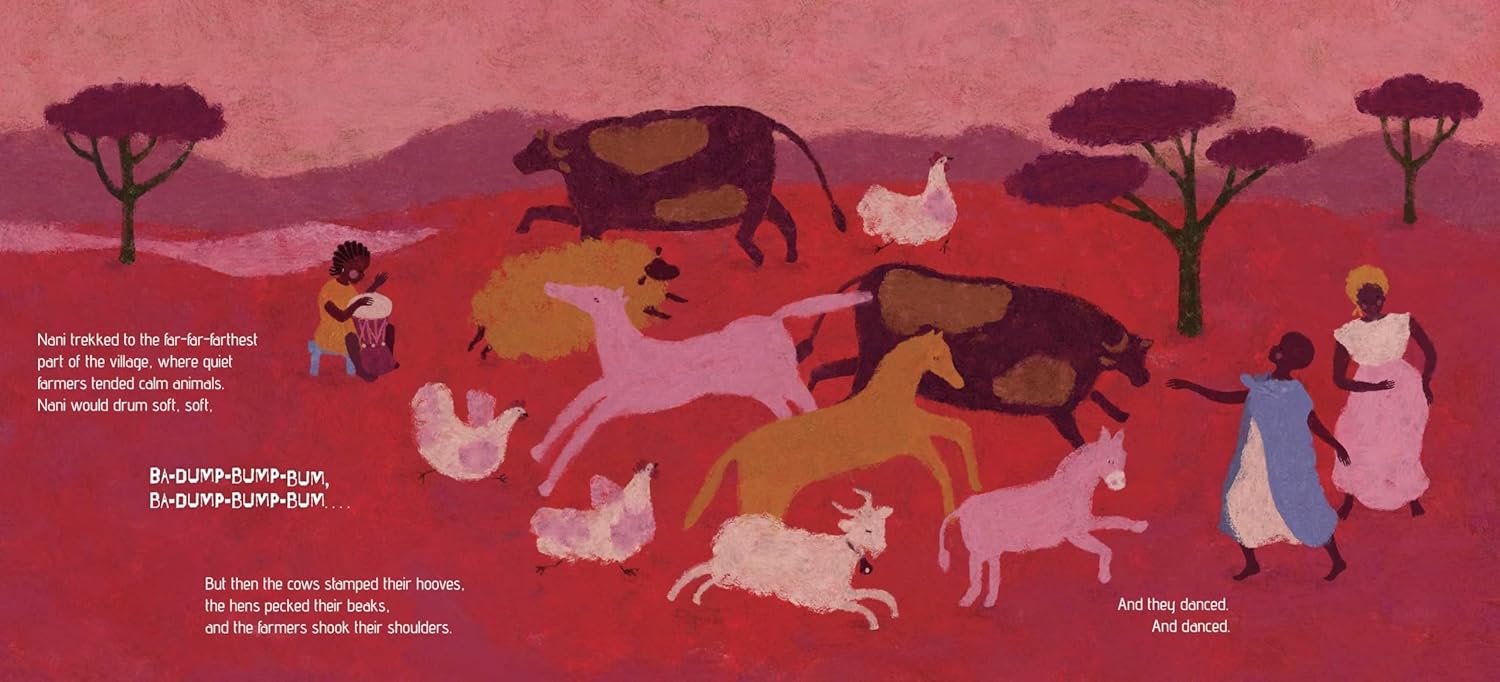
The joy of movement also features strongly in Nani and the Lion. Do you have any advice for young people—or their teachers—who struggle with writing activities because it’s “hard for some students to sit still for so long”?
Who has to sit to write? We learn and create in different ways. Some students simply need to move, and that is okay. As long as they aren’t being disruptive to others, let them.
Plus, our attention spans are short. Students come with different learning styles, some neurodivergent and others neurotypical. I recommend writing in short spurts. It’s fine to ditch the pen and paper to record ideas on audio. Take time to daydream and jot down the ideas and visuals that come. Move around the classroom, lean against the wall. Writing can happen beyond the desk.
Move around the classroom, lean against the wall. Writing can happen beyond the desk.”
Your website notes that one of the topics you enjoy speaking to groups about is “mining your life for stories.” Would you like to share an example of how that has played into your books?
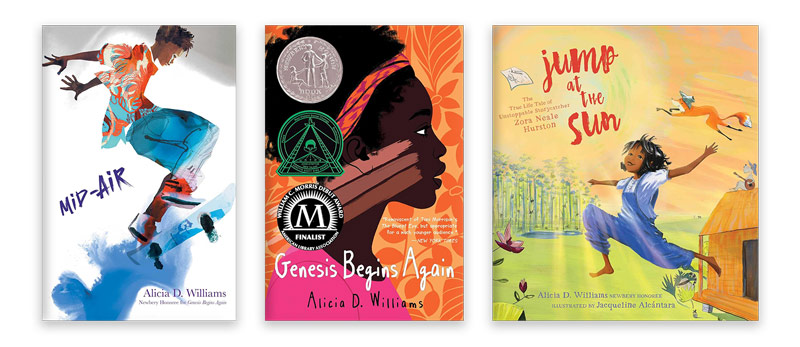
For Mid-Air (Atheneum/Caitlyn Dlouhy Books, 2024), I conjured childhood memories with my brother. He wasn’t a reader, but he loved comic books. With him, I read Batman and the Incredible Hulk stories. On Saturday nights, we would stay up after midnight to watch karate movies. Back then they used voice-overs, and we would crack up with how the words never matched the lips.
These memories are reflected in the novel, with Isaiah and Drew watching martial arts movies and practicing the moves as I worked through my own grief over losing my brother.
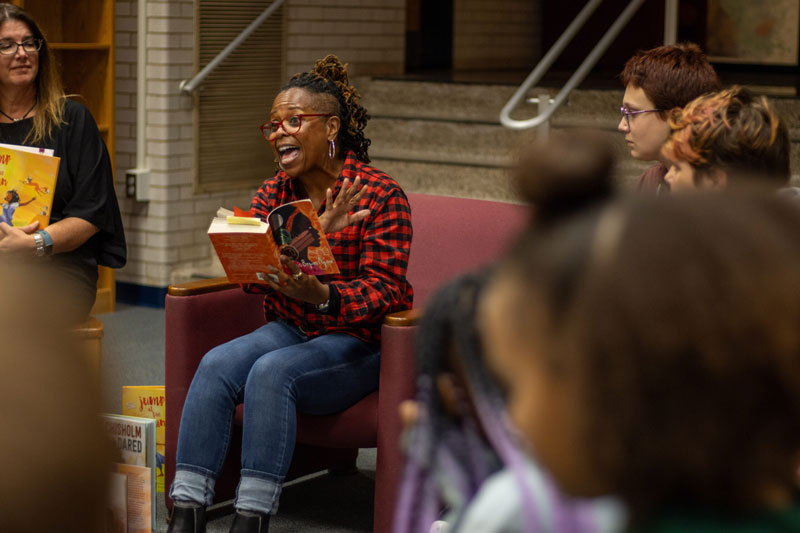
What’s your best advice for young people who have a dream they want to pursue?
A dream is a desire that you have created. And if you have the power and imagination to create this desire, then you have (or will have) everything to make it come true . . . if you believe. I know it sounds corny, but you can’t have any doubt or fear to make it happen. That’s how powerful thoughts and words are. Many people talk themselves right out of their dreams and then use excuses as to why they haven’t happened.
My daughter was in eighth grade when she went to a computer-coding summer camp. She was one of two girls out of a group of boys. A few of the boys said, “What’re you doing here? Coding is for boys! You can’t do this!” She said to herself: Bet, I’ll show you.
She didn’t have coding experience, but she listened to what the teachers taught, was curious (and you must be curious to get better at a thing), and she grinded until she coded her own game. Turns out, hers was one of the best in the camp!
Sometimes when doubt arises, you have to tell yourself, or others when they try to plant doubt in you: Bet, I’ll show you.
A dream is a desire that you have created. And if you have the power and imagination to create this desire, then you have (or will have) everything to make it come true . . . if you believe.”
Do you have a favorite example of the way one of your books has been used in a classroom or library setting? Or a favorite anecdote about the way a young reader has responded to your work?
Yes! At one school visit in particular, I was thoroughly impressed with the fishbowl discussion. The questions the students posed were thoughtful and went beyond age-assumed questions. In those sessions, they delved into themes, characters, and offered personal examples. Some students shared experiences with colorism; others spoke about home pressures.
Class discussions are amazing because so often, we tell children what to think or what to memorize to pass a test. Discussions form trust, not only with peers and teachers but trust within themselves. Speaking aloud gives students a chance to formulate and try out ideas, to challenge and expand their thoughts. We don’t share in a safe and honest space often enough, especially regarding our own experiences. These teachers gave themselves permission to move beyond question sheets—yes, question sheets serve their purpose. Still, they moved beyond traditional questions that lead the reader to a specific answer—which is strategy too. Yet their approach taught me the power of moving to a more personal direction that allows for a deeper understanding and connection to the story, along with empathy and intersectionality. The demographic of readers for books like my novel Genesis Begins Again (Atheneum/Caitlyn Dlouhy Books, 2019) expanded within these classrooms because of this gift.
I also get direct messages from teachers with statements such as: My student never reads, but she read Genesis . . . My student was sick, but still pushed through to read your book . . . My students are English language learners and couldn’t put Genesis down. . . One by one these emails would come. And each time I would think: Wow, this is the most astonishing testament to story. I am grateful for these messages because that means teachers, with all the stress and tasks on their plates, pause to see their students and meet them at their needs. Whether it be a struggling, reluctant, or defiant reader, these teachers took time to offer the right book that spoke to their students.
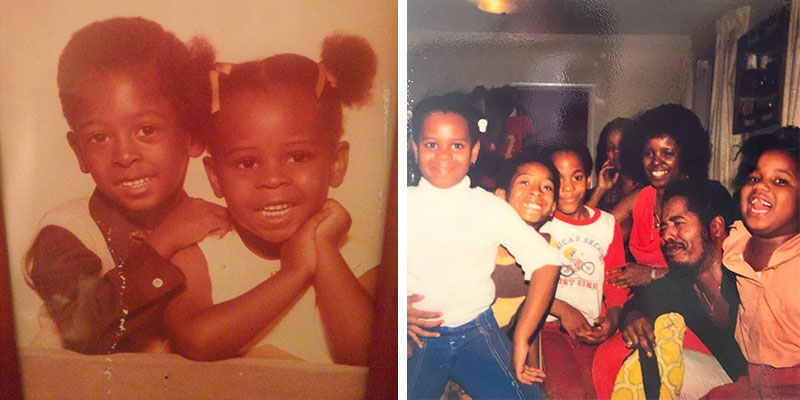
What details about your childhood would you like to share with young readers? How did that time in your life shape you as a writer?
I was a shy, chubby child who was easily embarrassed. I was awkward and poor too. I wasn’t a reader and definitely not a writer. There were no libraries and definitely not any bookstores in my community. What we had was the bookmobile. I know it sounds ancient, but it was a mini-library in a big bus. And that big bus saved my life.
I found books that spoke to me. I read a lot of Judy Blume. My life was tough, but I found humor in Superfudge and Tales of a Fourth Grade Nothing. Like Genesis in Genesis Begins Again, I was often the new kid and found how to deal with friendships in Are You There God? It’s Me, Margaret. And remember how I said I was chubby? Well, I got teased a lot. And I read Blubber to learn how to deal with bullies.
It was the introduction to stories as a little girl that led me to a love of stories.
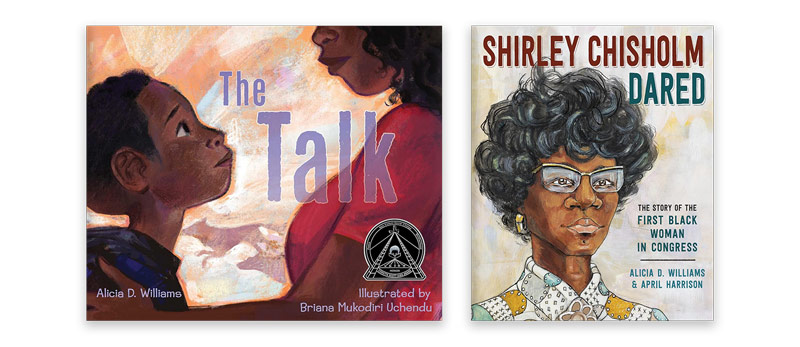
What would you like to tell your fans about your forthcoming books?
Fans? I have fans? Stop!
Nani will make another appearance in Nani and the Monkey, also illustrated by Anna Cunha. This is a trickster tale inspired by the African folktale featuring Gum Baby and the Black American folktale of Brer Rabbit and Brer Fox, featuring Tar Baby. Tricky Monkey plays one too many tricks and Nani, with other animal friends, set out to teach Monkey a lesson.
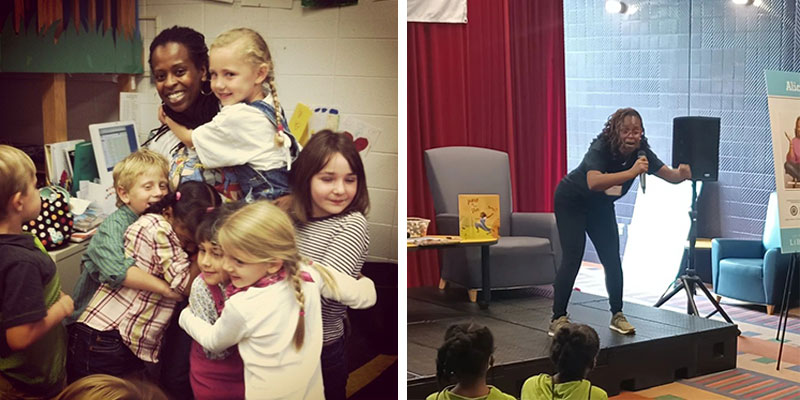
What’s your favorite part of creating books for young people?
Creating books for young people! It’s that simple. I get to create books that young people will read; what a gift! I wasn’t much of a reader, but books like the ones mentioned above opened my world to the joy of getting lost in a story.
Those books planted the seed for a love of reading. And I simply hope that my stories can offer the same to another young reader.
Books planted the seed [in me] for a love of reading. And I simply hope that my stories can offer the same to another young reader.”
What are the best ways for educators and librarians to connect with you or to follow you on social media?
Educators and librarians can subscribe to my newsletter via my website, www.aliciadwilliams.com. I share book news, details about my process, and my journey as a nomad. I can also be followed on Instagram @authoraliciadwilliams and Facebook @AliciaDWilliamsStoryteller.