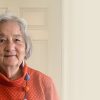

“I like to write characters who manage to find silver linings,” says Holly Goldberg Sloan. Her newest middle grade novel, Finding Lost (Rocky Pond Books, 2025), features another of these endearing, resilient characters. Cordy is a middle-schooler who is mourning the death of her father and grappling with change. With Cordy’s character, Sloan strikes a seamless balance between humor and pathos, perceptiveness and innocence, and fear and fearlessness. Better yet, the story also introduces an irresistible dog named Lost, whose heart is as big as his breath is bad. Finding Lost has been named to Kirkus’s list of “Best Middle-Grade Fiction” and Amazon’s list of “Best Children’s Books” for 2025.
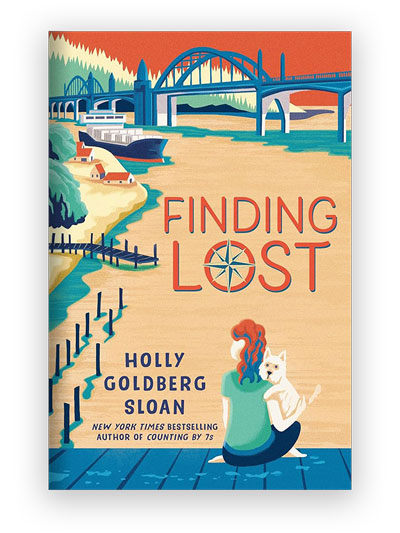
Here, Sloan talks with Lisa Bullard about the personal experiences that inspired Cordy’s story, how it’s possible to move on after heartbreak, and some of the creative ways her books have been featured in classrooms and communities.
What are the origins of Finding Lost?
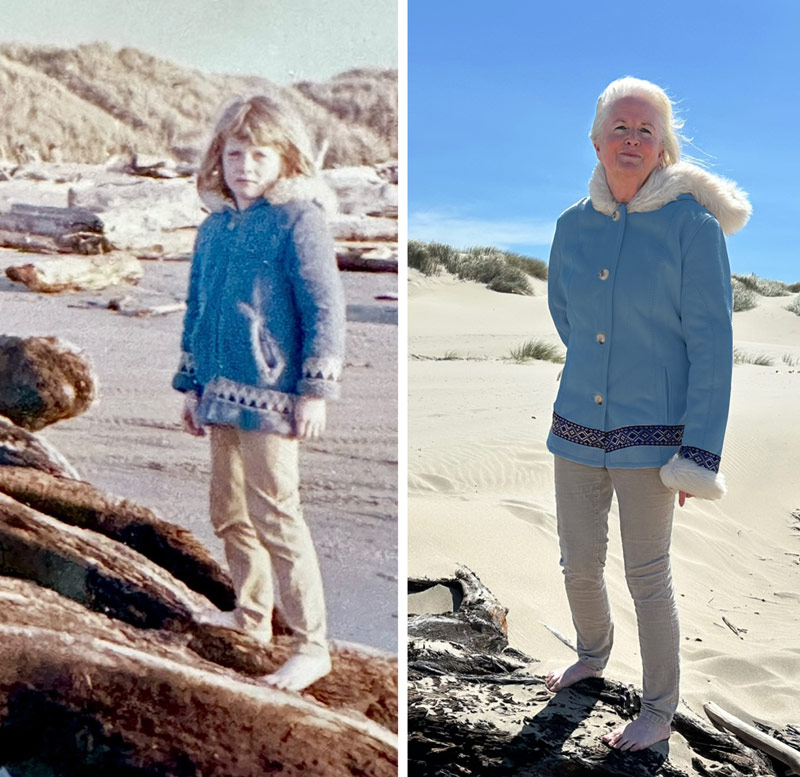
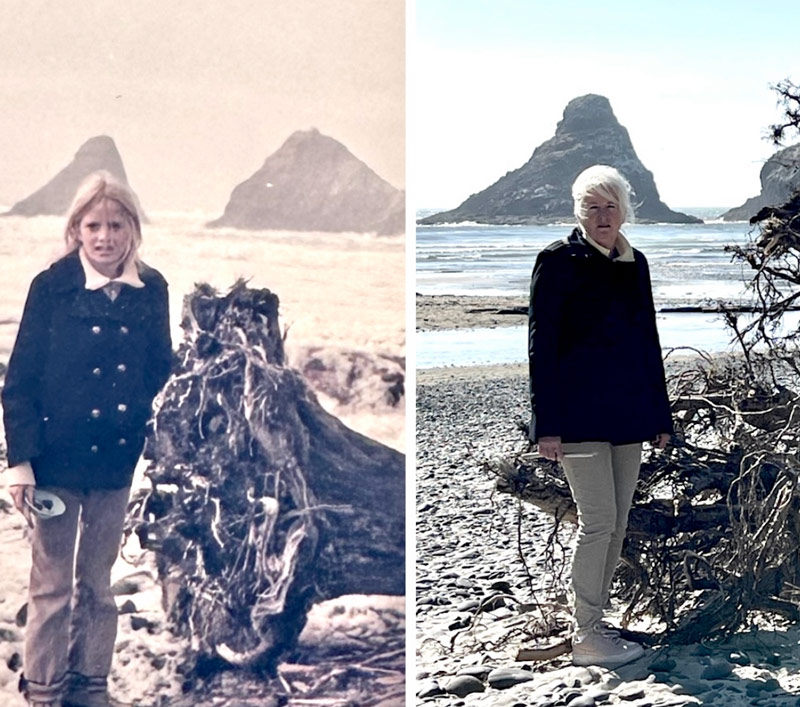
I start everything I write with a place and a character and a problem. In this case, the Oregon coast was the beginning. I spent a big part of my childhood there. The small town of Florence, situated where the Siuslaw River empties into the Pacific Ocean, is the home for an abundant amount of wildlife. It is also a place with a lot of rain, wind, and fog. It’s beautiful, but a person needs to love the colors gray and green because the skies are mostly cloudy, and many of the trees wear yearlong coats of emerald beaked moss.
When I lived there, we never said we were going to the beach, because there would be no one in sight in a swimsuit on a towel. The Pacific Ocean is fierce, with sets of pounding waves, nearly constant riptides, and frigid water. Dozens of people die every year along this coastline.
I grew up, I moved away, and it was all in the past. But in the summer of 2023, my whole family returned to Florence to fulfill my mom’s wish to have her ashes spread where she’d asked to be her final resting place. It was during this visit that I fell in love with Oregon all over again. I began to read the Siuslaw News, which is the local area paper. This was the beginning of Finding Lost, because it was in reading the paper’s archives that I found a story from 2020 detailing a crab-fishing vessel that was hit by a sneaker wave, resulting in the loss of two lives.
I have a personal connection to this kind of tragedy. The father of my two sons drowned in the ocean. We were divorced, but had remained very close friends. I know what it feels like to have someone’s life end in the water.
How does a person move on from profound loss? You don’t get over it, but you learn how to live with it. I believe you do that with the help of other people, with the passing of time, and with humor. The first time you smile or laugh after heartbreak is the beginning of a person’s healing.
How does a person move on from profound loss? You don’t get over it, but you learn how to live with it.”
With Cordy, you’ve captured the voice of a completely believable young character. What inspired her creation?
I think the voice in fiction is the whole game.
I like to write characters who manage to find silver linings. The voice of the character of Cordy is the voice of my childhood. It’s the voice of someone who connects with nature, who has formed deep friendships, and who has the love of her family. But it is also the voice of someone who is constantly questioning the world and looking for answers.
Does your process of creating child characters differ from how you create adult characters?
I would say that I create adult and kid characters in a similar way. I often start from real people. I merge personality traits to form one character. But of course, at the heart of every character is probably me. That gets back to the idea of voice. When my friends read my books they always laugh that it means spending time with me, in different forms.
Finding Lost features a kind of through line for many of your books: a child who has a missing parent(s), so other adults stand in as key mentors. What draws you to that recurrent story element?
Because of my father’s work, I spent part of my childhood overseas. I know what it feels like to have family and friends suddenly missing. I understand the process of building community from both the perspective of an adult and a child.
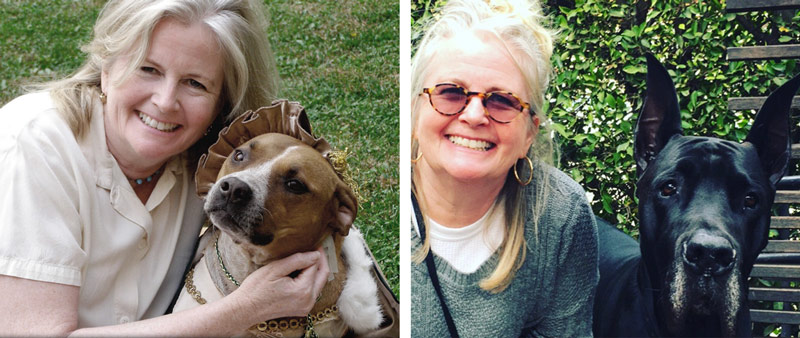
Lost—the lovable but foul-breathed dog who unexpectedly enters Cordy’s story—is also an important character. Is he based on a dog from your own life?
I’m one of those people who loses my mind over dogs. And that goes back to my childhood. Starting when I was in kindergarten, I walked home every day from school. I was surprised to discover recently on Google Maps that this epic trek was just under a mile. There was a hill involved, but maybe the combination of a lot of rain and a portion of the walk having no sidewalks made it seem like a much bigger journey. The route I picked to get from school to my house was not the most direct. I made three different detours in order to see dogs.
Back then, in Oregon where we lived, people just opened the door and let out their pets. You could find them sleeping in driveways or sheltered from the rain under trees. There were dark and damp doghouses in some of the yards, and I knew and loved many of the four-legged occupants. So rather than go straight home, I made turns in order to see Silvia Snow (a blue-eyed Samoyed who could actually smile), and a rascal of a mutt with stringy marmalade-colored hair named Wig. I loved my neighbor’s dog Tawny so much that as soon as she was let outside, she came straight across the street to my back door. This led to some complicated discussions about custody! My family had our own dog, named Robear, who I worshipped; one was not enough.
I’m one of those people who loses my mind over dogs. And that goes back to my childhood.”
Can you share some examples of how your books have been used in school, library, or community settings?
So many interesting projects have been done with my books. Planting gardens, fostering animals, learning about things as varied as immigration, wildlife rehabilitation, and cooking. After reading Finding Lost, kids have expressed an interest in fishing, crabbing, dolphins, still photography, veterinarian practices, speaking Spanish, learning about Oregon, nursing, and even competitive swimming!
Kids have drawn pictures of how they imagine characters and places depicted in my novels. I spoke in a public library in Chicago, and two boys cooked every food mentioned in one of my books and brought it all in to share. It turns out they both had massive library fines for late books, and the head of the library erased everything they owed after that day.
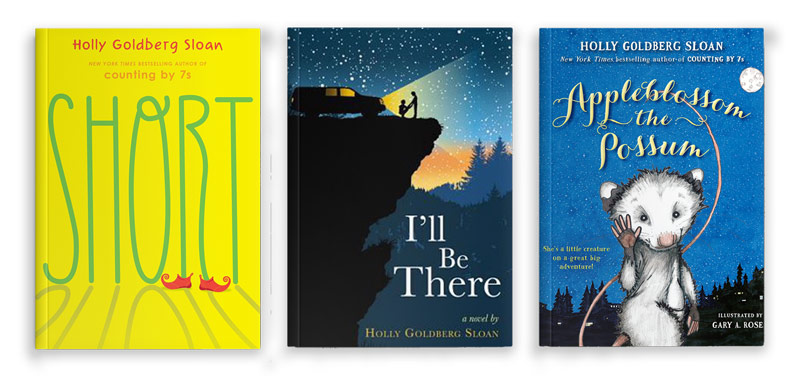
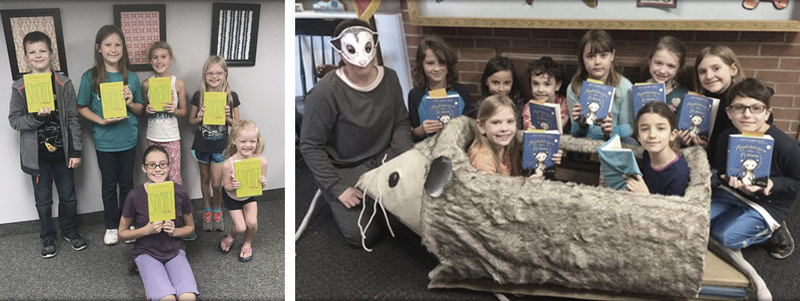
I think that because I’m interested in plants and animals, many schools have made projects centered on students exploring the natural world. Sunflowers are planted. Possums have been brought into the classroom. Stories are shared about pets.
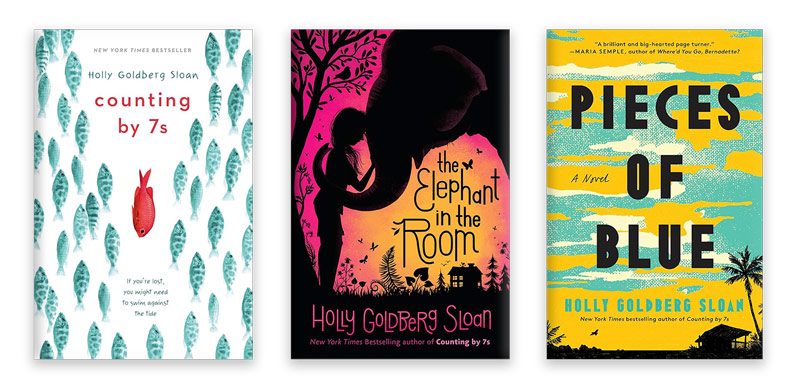
One of my books, The Elephant in the Room (Rocky Pond Books, 2021), was chosen for an all-district read. They planned so many community events, but one thing I thought was pretty great was that they hid a really large stuffed elephant in different public places around town. That elephant ended up in a car dealership and a coffee shop, and I think a carwash. Anyway, when people saw the elephant, they took a picture and then reported the sighting. It was a kind of Where’s Waldo but for a fictional character from my book. I really loved that.
Do you have a favorite anecdote about one of your young readers?
I love talking to kids because that helps me understand how my work is open to interpretation, and that’s what reading is all about.
One of my favorite things to happen as an author was when I visited a school for kids with learning differences. When I arrived, the principal of the school was waiting for me in the parking lot, which is unusual. She said, “I want to speak with you for a moment before you go inside to the auditorium. In the newsletter that was sent home to the kids, it said there would be a book signing for Counting by 7s (Rocky Pond Books, 2013). Many of our students are very literal thinkers. One student became concerned that this process would take too long for you, so last week she had her mom take her to a bookstore, and she bought a book. She then spent two days going from classroom to classroom, having everyone sign it. She will give it to you today. We are careful here to let our students understand the world in their own way. So that’s the book signing.”
I love that copy of Counting by 7s, and I keep it right on my shelf near where I write every day. It’s covered in the names of those kids.
I love talking to kids because that helps me understand how my work is open to interpretation, and that’s what reading is all about.”
When you talk with kids, what do you tell them about the importance of reading?
I tell kids that reading will change their lives, and I mean it. I tell them that when they read, they get to travel. To fall in love. To see the world through someone else’s eyes, which is the key to empathy.
I read a lot as a kid. I loved books, and I still do. I was a kid who asked a lot of questions.
What’s your best advice for young people who have a dream that they want to pursue?
My life advice is: “Don’t quit.” I mean that in all ways. Don’t quit on a project, a passion, a sport, an instrument, a language, a person, or a dream. Show up. Keep going. Keep trying. If you feel that you’re failing, that’s when you really don’t quit.
My life advice is: ‘Don’t quit.’ I mean that in all ways.”
What’s your favorite part of creating books for young readers?
My favorite part is the connection I get from young readers. I was recently on a book tour, and after I had finished speaking, three kids were waiting for me. They looked anxious, or at the very least concerned. I asked if everything was alright because the other students and teachers were filing out. One of the kids got up her nerve and said, “Would it be okay if we gave you a hug?”
And of course, I said yes.
What are the best ways for educators and librarians to connect with you or to follow you on social media?
The best way to find me is through the contacts listed on my website, hollygoldbergsloan.com.